hero-home

Composite Facade – Stedelijk Museum Amsterdam

Amsterdam
  • Architecture

CLIENT
Stedelijk Museum Amsterdam

LOCATION
Amsterdam, Nederland


YEAR OF COMPLETION
eind 2012


SURFACE
2700 m2

MATERIAL
Twaron and carbon fiber

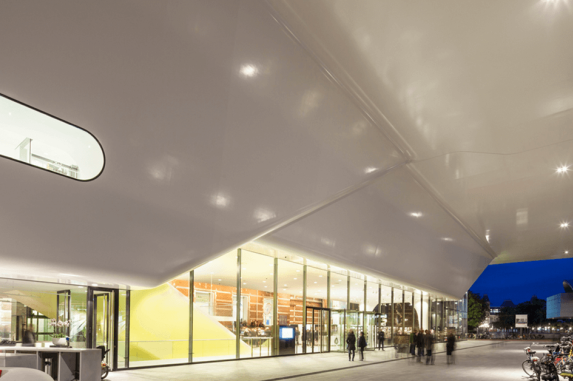
Seamless composite facade with a monolithic appearance. Exterior finish sprayed on site, as if it were a mega yacht. 8,500 kilometers of carbon and aramid fibers have been incorporated into the ‘bathtub’.

Holland-Composites-gevel-wandpaneel-panelen-facade-wallpanel-composite-structure-building-Stedelijk-

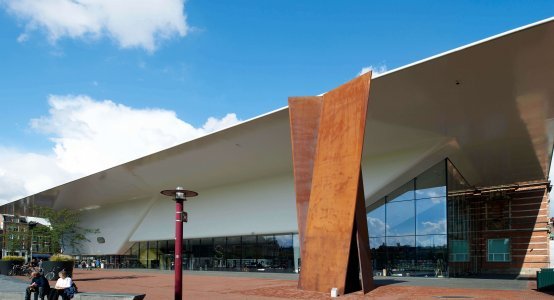
The composite facade of the Stedelijk Museum in Amsterdam is one of our most talked-about projects. And one of the few projects that immediately received a national nickname: ‘the bathtub’.

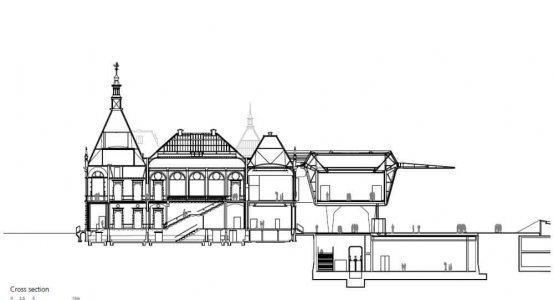
It was clear from the very beginning that this would be a technically very challenging, but feasible project. A 2,700 m², white, glossy and seamless composite surface, floating above the Amsterdam Museumplein. That was the idea of Benthem Crouwel Architects, to create maximum contrast with the original museum building.

The new building at the Stedelijk Museum in Amsterdam is, to our knowledge, the largest plastic object in the world. In any case, it is the largest seamless structural composite building construction to date.

An iconic building that was partly made possible by applying a combination of carbon and aramid fibres. Due to an opposite reaction to temperature changes, this combination ensures minimal expansion of the material. These unique properties of the fibres make the seamless and smooth composite façade of more than 100 metres in length possible.

Holland-Composites-gevel-wandpaneel-panelen-facade-wallpanel-composite-structure-building-Stedelijk-
Stedelijk-project-1

The chosen combination of the chosen aramid and carbon fibres therefore ensures minimal expansion and shrinkage of the material with temperature differences. An important property for a façade of this size, which must optically appear to consist of one piece.

For comparison: materials such as concrete, glass and aluminium expand by at least 175 millimetres when the temperature rises from -20 to +50 degrees Celsius. With an expansion of that magnitude, seams have to be applied to the façade, which would disrupt the image of a smooth façade. A nice detail: we have used more than 8,500 kilometres of advanced fibre material.

Development, production, transport and assembly of the composite façade for the Stedelijk Museum Amsterdam by Holland Composites.