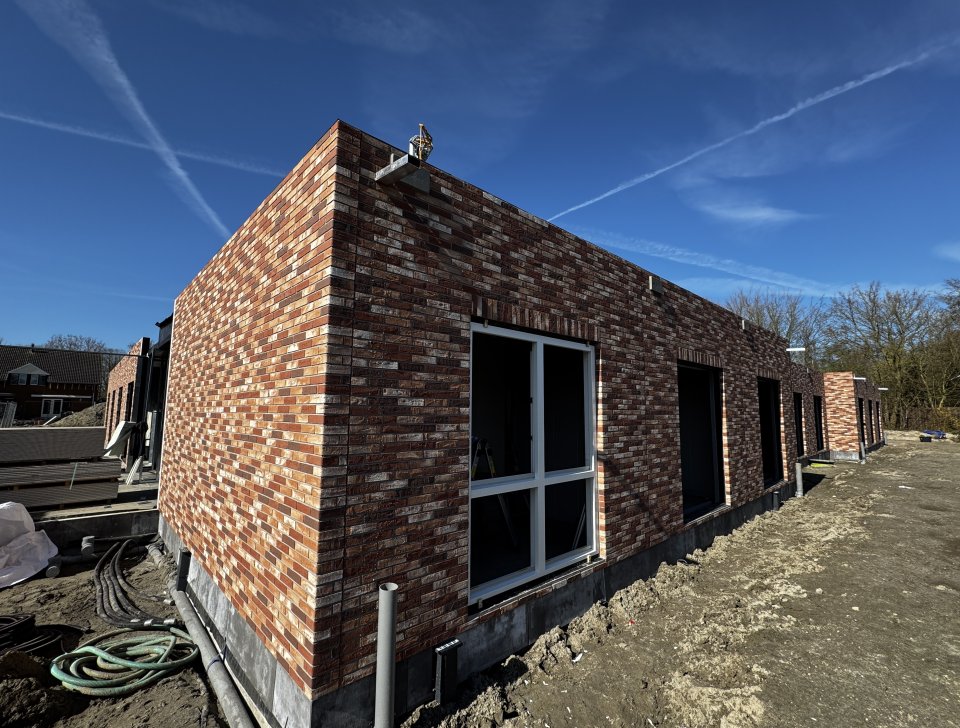
It is crucial to achieve more with less material in the extremely environmentally polluting construction industry, says Sven Erik Janssen, commercial director of Holland Composites. The company made a solid start with the development of Duplicor a few years ago. Duplicor is a biobased composite material that is not only sustainable and recyclable, but also delivers the same performance as conventional building materials with less material. It is also very fire-safe. The resin of the biocomposite building material is made from plant residues, in combination with glass or natural fibres such as flax, jute or hemp. The insulation core consists of recycled PET bottles, cardboard or biobased cork.
Holland Composites has made a flying start with its new 2D modular and flexible construction system Qbix based on biocomposite. The first order immediately consists of 99 homes for the Limburg elderly care organisation Cicero. Lego and Ikea were inspiring examples to arrive at the innovative and scalable Qbix concept.
Easy interchangeable
A number of construction and renovation projects have already been carried out with Duplicor roof or facade elements, as well as complete facades. A striking example is the multifunctional residential and work complex The Pulse, which is currently being built on the Zuidas in Amsterdam.
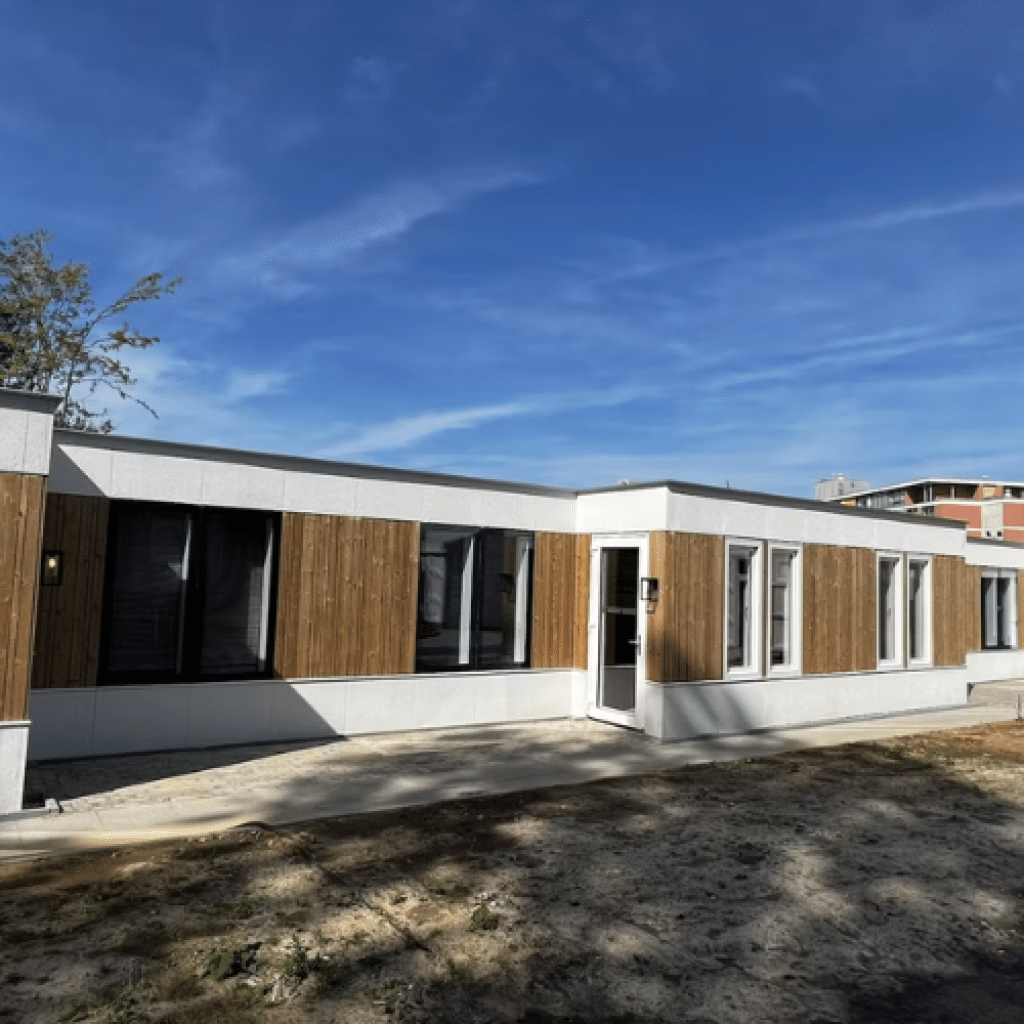
By combining the sustainable and lightweight Duplicor building material with an industrial construction method that makes it possible to easily interchange and reuse components, the environmental impact can be reduced even further, they thought at Holland Composites. This is how the modular 2D system Qbix was created. It has minimal CO₂ emissions. Just as CO₂ is stored in timber construction, this is also partly the case in the bioresin component of Qbix. All building elements are produced in the two factories of Holland Composites in Lelystad and then assembled at the destination to form a home, school or business premises.
Flexible and modular
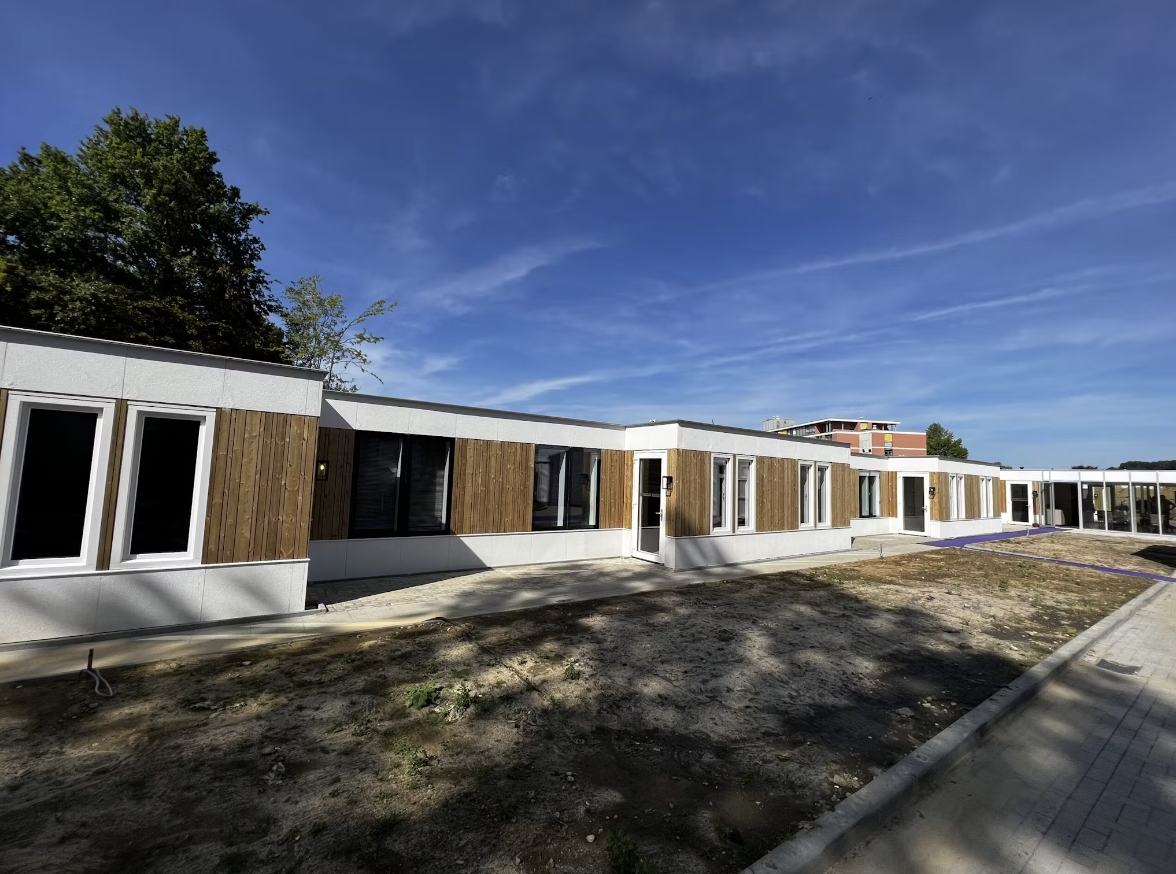
Unlike modular builders such as Jan Snel, with whom Holland Composites has worked extensively in the past, the company does not supply complete units. Janssen: “We make 2D modular building blocks, with which you can assemble a building.” He regularly draws the comparison with Lego blocks, but mainly from a material perspective. “Lego would never have been a success without the right choice of materials, in this case plastic, cast in molds.” Holland Composites has not only learned a lot from Lego, but also from a company like Ikea, where interchangeability is an important part of the company philosophy.
With the biocomposite elements from Qbix, any possible building can be assembled. “This makes us much more flexible in execution than the unit builders with their modules. One is not better than the other, but we have a flexible modular alternative, which also consists of biobased materials. The unique thing is that we achieve a high degree of re-assembly and reuse of materials,” he says.
Care homes
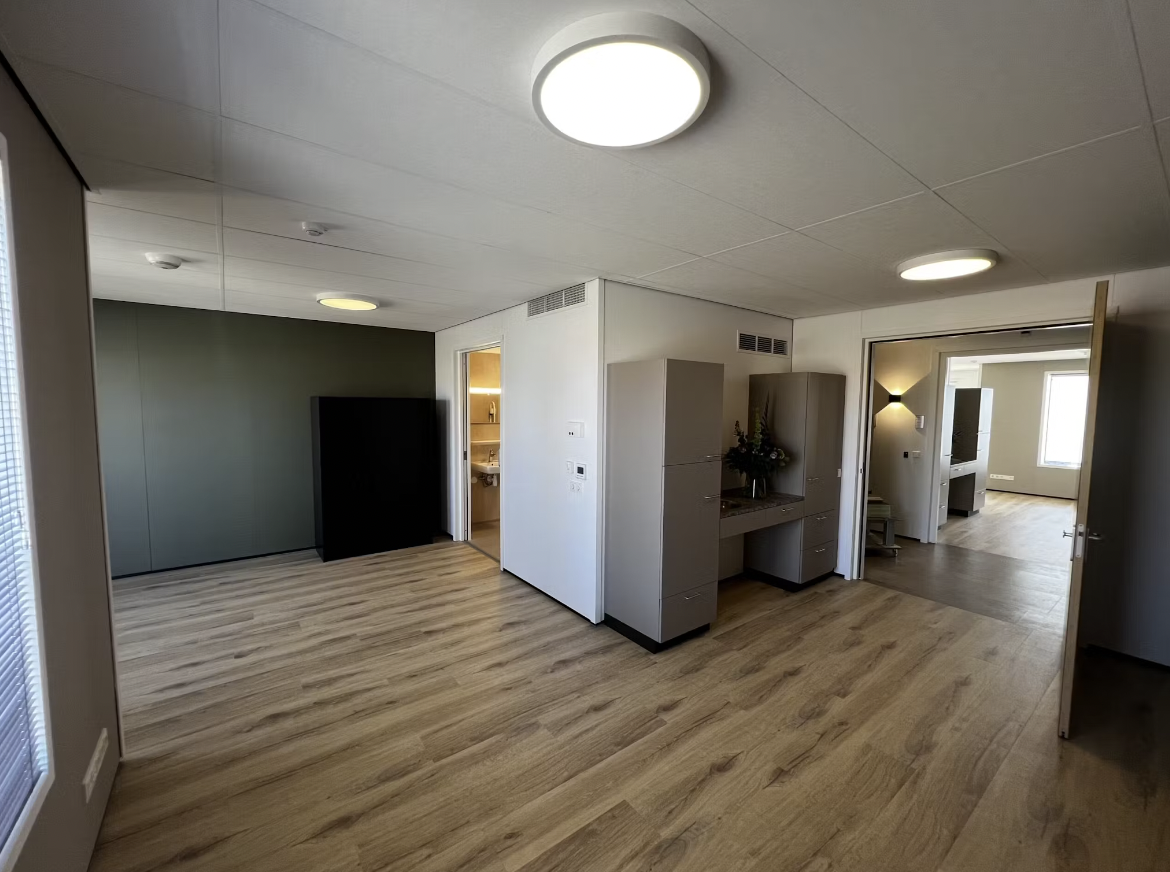
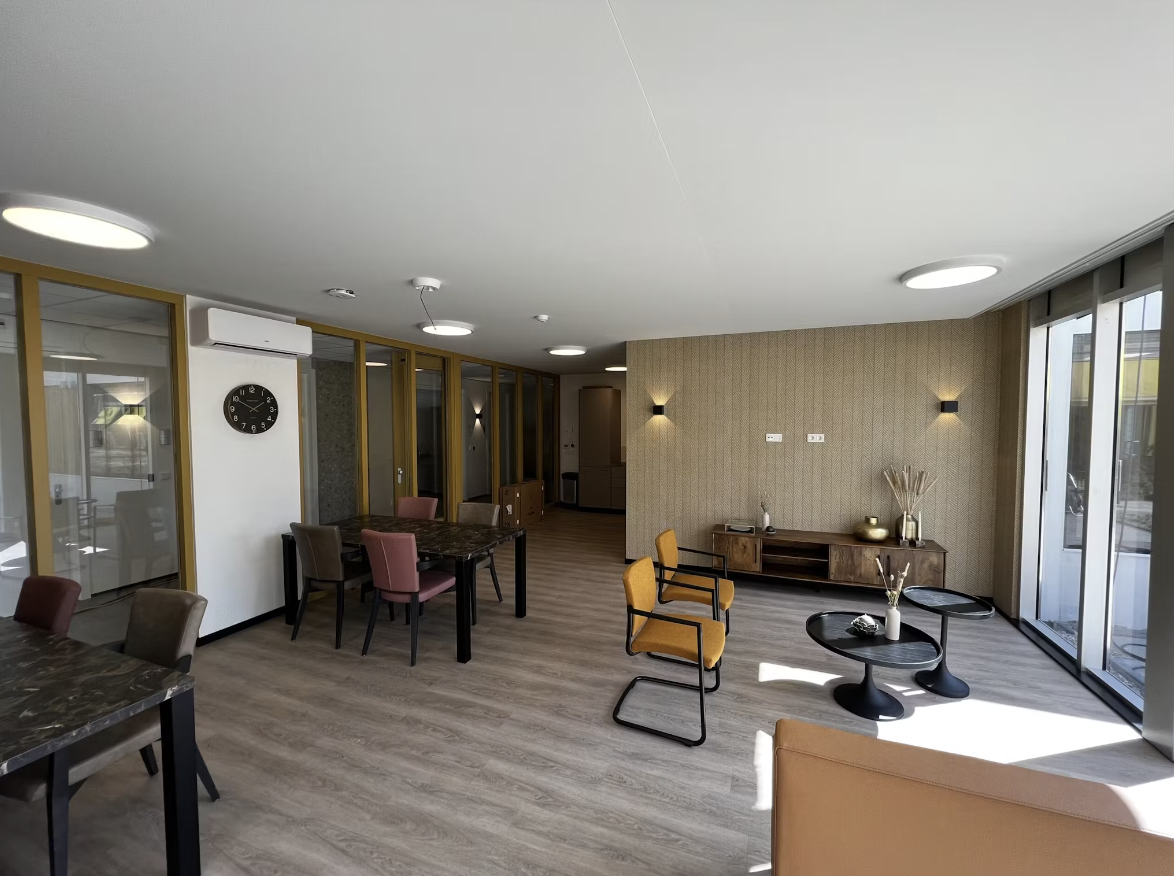
The first order is now in full swing: 99 care homes for the elderly, commissioned by the Limburg Cicero Zorggroep. They will be built in Amstenrade, where Holland Composites already built a pilot home three years ago. According to Janssen, a major advantage for care is that the homes can be easily and quickly adapted thanks to the flexible Qbix system. For example, if the beds become wider, this will not be a problem if residents have to be transported to a treatment location with their bed and all. The doorways can be easily adapted to this, without breaking or demolishing. "We simply change the bricks. This allows us to achieve an extremely high percentage of reuse."
Ambitions
Although Qbix has only just been launched, there is already a lot of interest. The company is initially focusing on sectors where requirements change quite often, where the flexible Qbix system can respond well. The ambitions for the coming years are great. Qbix should become an important pillar for Holland Composites.
Scalable
According to Janssen, the system is highly scalable, in the Netherlands and abroad. Holland Composites does not necessarily have to produce all the elements themselves, but wants to do so in collaboration with other companies. “We think that this is absolutely a material that is easy to produce in the Netherlands and other countries with our basic components and will be a solution for lightweight and climate-conscious construction.”
Qbix® website Duplicor® website
More news
Kop Dakpark Rotterdam