At the Zuidas, ‘The Pulse of Amsterdam’ is currently being fitted with prefabricated facade elements based on biocomposite. Holland Composites developed Duplicor, a recyclable biocomposite that can be used as facade cladding thanks to its fire-resistant properties. A unique development that ties in with the sustainability ambitions in the construction sector.
Holland Composites from Lelystad has introduced biocomposite in the Netherlands and is focusing on its use in construction applications. “What makes conventional composite materials less suitable for construction applications is that the toxic resins are extremely flammable,” says director Sven Erik Janssen. “We have replaced the toxic resin with a resin based on plant residues, with the advantage that this product is fire-resistant and therefore suitable for construction applications.”
What makes conventional composite materials less suitable for construction applications is that the toxic resins are extremely flammable.
With the arrival of a fire-resistant biobased composite product, the construction world is open to composite construction elements. Sven Erik Janssen: “The material is still just as free-form, low-maintenance and lightweight, which means you can use it in all sorts of ways. Facades, roofs, floors: you can use this product as building blocks in many different product groups within construction.”
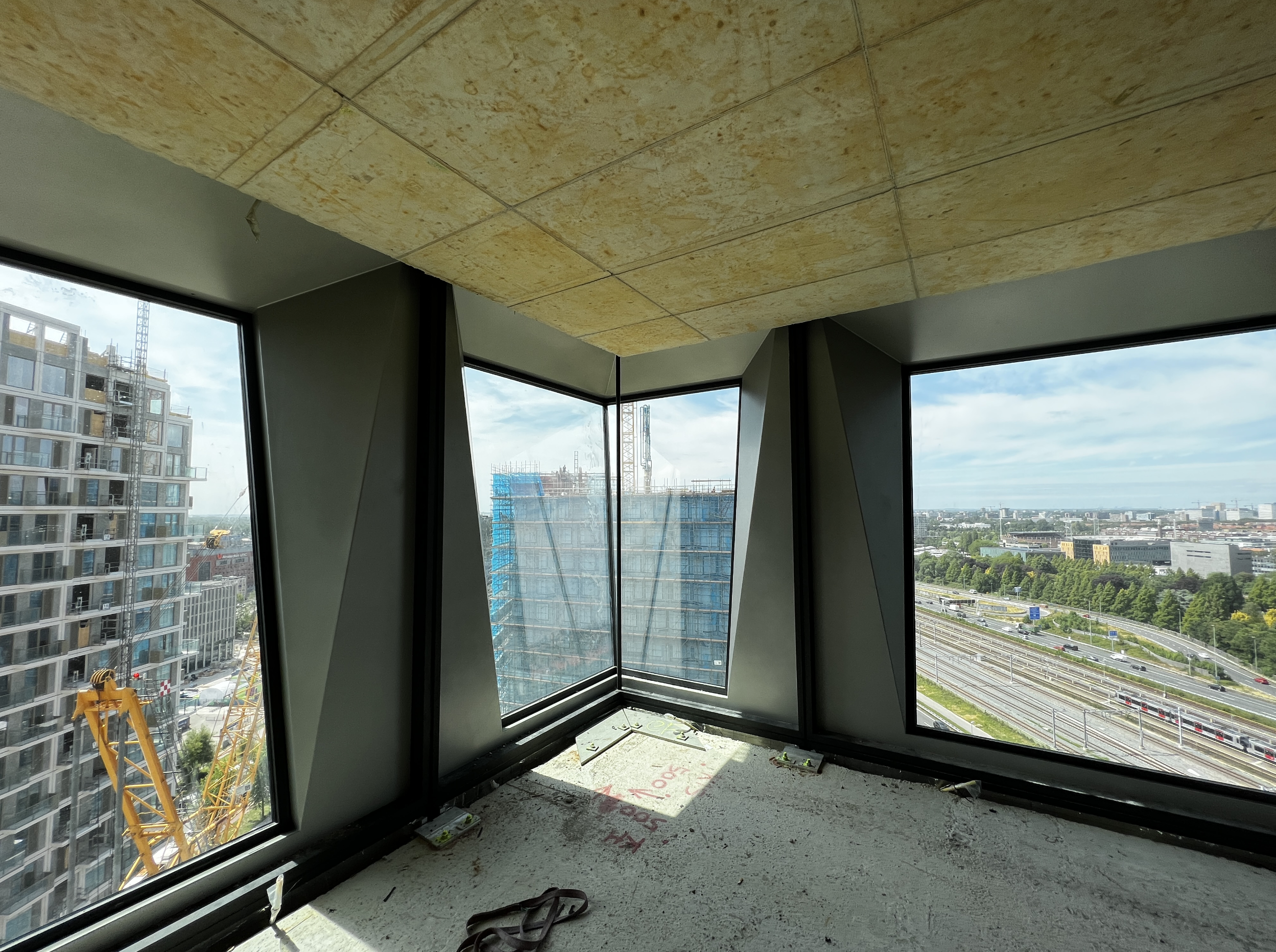
Technical director of Holland Composites Pieterjan Dwarshuis even thinks that biocomposite can form the basis for new innovation in the construction world: “Universities have been proclaiming for years that we need to innovate the construction world following the example of the automotive sector. Producing prefabricated elements and assembling them on the construction site. But then you need a material that fits this. Composite has always been suitable, but then you had the disadvantages of flammability and environmental impact. This material eliminates these two aspects and really offers a lot of new possibilities.”
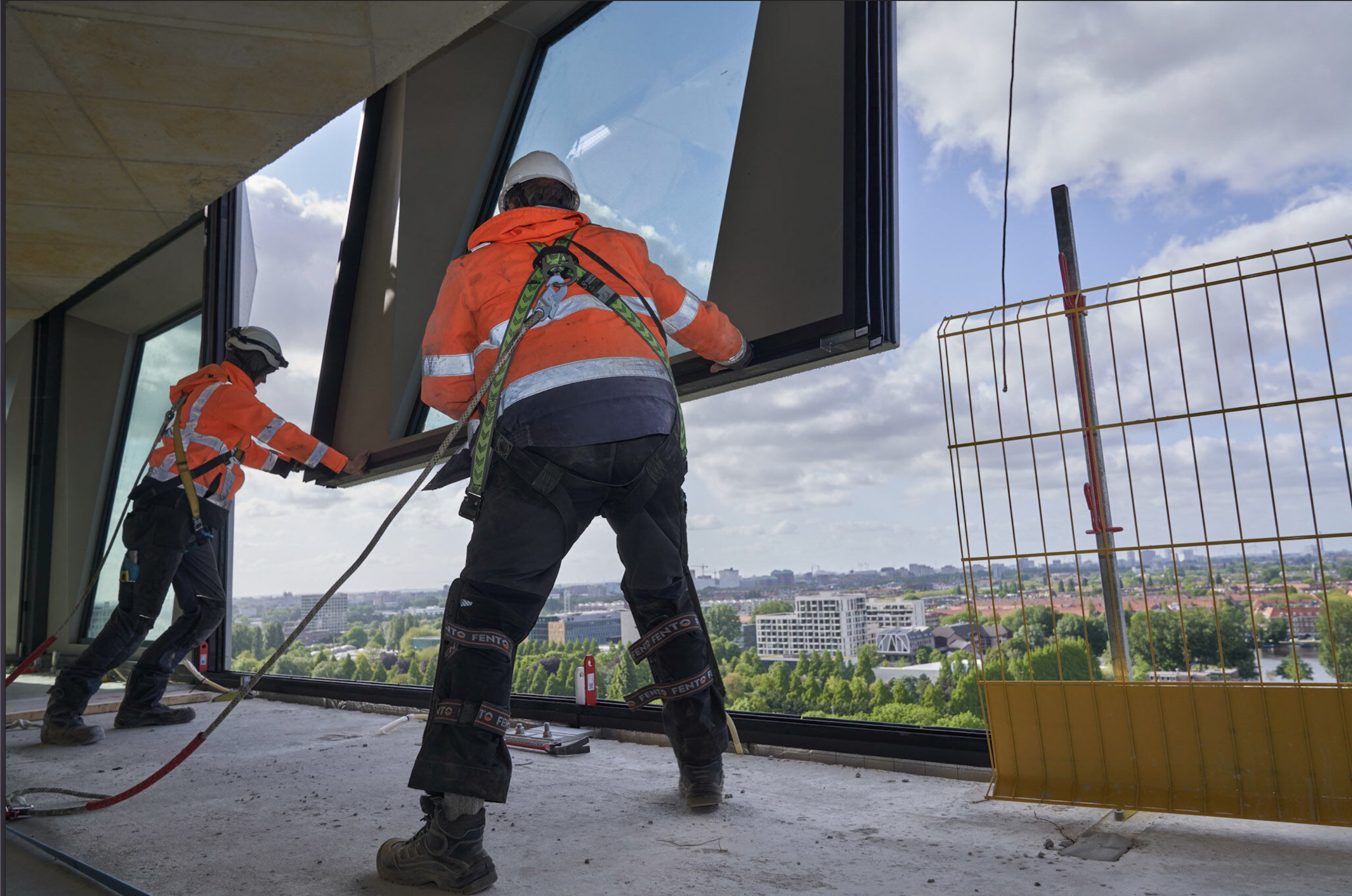
The use of composite facade panels ensures that construction can be done much faster. The construction of the 21-storey The Pulse is expected to be completed by the end of 2024. An eye-catcher for Holland Composites, although Pieterjan Dwarshuis expects that this is only the beginning of biocomposite in the construction sector: “This is really a product with which you can make progress and with which you can have a large-scale impact in making the entire construction world more sustainable.”
More news
Kop Dakpark Rotterdam